Selecting the right dispensing machine can shape an entire electronics assembly process. In Smt Industry Dispensing, accuracy is not a marketing detail. It affects bond strength, void control, rework rates, and long-term product reliability. A misplaced adhesive dot may look harmless. Under a microscope, it can spread beneath a component, contaminate nearby pads, or weaken thermal performance.
This guide examines 10 best SMT industry dispensing machines for global buyers. It considers practical factors, including jetting speed, repeatability, valve design, software control, maintenance access, and support availability. It also considers real factory conditions. Operators may handle tiny 0.3-millimeter deposits, changing material viscosities, and demanding production schedules. A machine that performs well in a laboratory may struggle beside a busy placement line.
SMT process specialist Chrys Shea’s process-focused view is useful here: “Consistency is the foundation of reliable electronics assembly.” That principle guides every comparison in this article. The strongest systems are not always the fastest. They are predictable, serviceable, and adaptable.
That distinction matters.
Buyers must examine more than catalog specifications. They should request sample testing, review calibration procedures, and inspect material compatibility. Footprint, training, spare parts, and regional service can also change the ownership experience. Some rankings remain imperfect because factory priorities differ. A medical electronics producer may value traceability, while an automotive supplier may prioritize uptime and environmental control.
This overview offers a practical starting point. It does not replace process trials or engineering judgment. But it can make the shortlist more focused, realistic, and easier to defend.
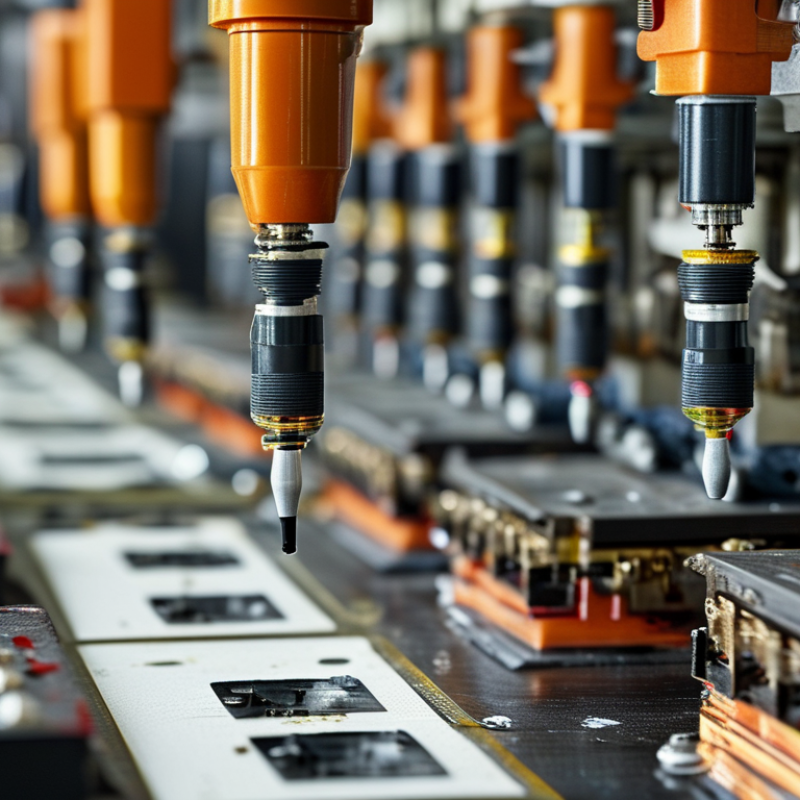
SMT dispensing machines apply controlled amounts of adhesive, solder paste, or protective material onto circuit boards. They use valves, pumps, and programmable motion systems to place fluid at precise locations. A small dot may secure a component before reflow. A narrow bead may protect a connector from vibration and moisture.
Their value is practical. Consistent dispensing reduces uneven bonding, material waste, and manual variation. It also supports smaller components and denser board layouts. In production, operators can inspect dot diameter, height, and position before defects spread across a batch. However, no machine removes every problem. Temperature, viscosity, nozzle wear, and board cleanliness still affect results. A technically advanced system can perform poorly when process data is ignored.
Tips: Test the actual material before purchasing. Check viscosity ranges, curing conditions, nozzle compatibility, and cleaning requirements. Request sample boards if possible. Measure repeatability, not only advertised speed. A slower machine may create fewer rejects.
Global buyers should also review software usability, maintenance access, spare-part availability, and operator training. Clear alarms matter on a busy factory floor. Safety features should protect workers from moving parts and chemical exposure. Local service coverage can be decisive, especially when production cannot wait for long-distance support. I would not choose equipment from specifications alone. Real dispensing trials often reveal limitations that brochures leave out.
High-performance SMT dispensing machines are judged by repeatability, not impressive brochures. In production trials, I watch whether each dot stays centered after several hours. Stable pressure control prevents uneven deposits and solder bridging. Repeatability matters. A rigid frame also reduces vibration during rapid table movement. The best systems maintain accurate dispensing across small pads, connectors, and irregular components. However, no machine performs perfectly without proper calibration and maintenance.
Key features include programmable dispensing speed, adjustable needle height, and real-time pressure monitoring. A reliable vision system checks fiducial marks before dispensing begins. This helps correct minor PCB shifts and protects placement accuracy.
Fast recipe changes are valuable when factories handle many board designs. Easy-to-clean fluid paths reduce clogging and material waste. I also prefer systems with clear alarms and accessible service parts. Complicated interfaces can slow trained operators, even when the hardware is excellent.
Tips: Test the dispenser with your actual solder paste or adhesive. Measure dot diameter at the beginning and end of a shift. Check temperature, viscosity, and storage conditions carefully. Keep backup needles available. Small details matter. Buyers should request sample boards, maintenance records, and repeatability data before purchasing. One overlooked issue is operator training. A powerful machine may still deliver inconsistent results when setup instructions are vague.
The ten leading SMT dispensing machines serve different production realities. Pneumatic micro-dot machines suit stable solder paste deposits. Jetting machines handle rapid, non-contact application. Auger-pump machines provide consistent volume for thicker materials. Screw-pump systems support fine control during long runs. Time-pressure machines remain practical for flexible assembly lines. Rotary-pump machines reduce pulsation in sensitive applications. Dual-fluid machines manage adhesives with separate curing needs. Desktop units help laboratories and small factories test processes. Inline machines connect with conveyors and automated inspection. Vision-guided machines correct placement around tiny pads.
Precision comes first. During production trials, engineers should inspect dot height, edge spread, and material waste. A machine may advertise high speed, yet speed alone cannot protect yield. Needle diameter, pressure stability, and substrate temperature often change the result. Operators should record these variables beside every sample batch.
Reliable buyers also examine cleaning access, software traceability, feeder compatibility, and service response. A vision system can improve alignment, but poor lighting may create false confidence. This is an easy detail to overlook. Machines with closed-loop monitoring usually support steadier output, especially during extended shifts. However, automatic compensation still needs regular verification. The most suitable choice depends on material viscosity, board design, takt time, and operator skill. A careful factory test remains more convincing than a brochure specification.
| Rank | Machine Configuration | Primary SMT Application | Dispensing Technology | Typical Positional Accuracy | Typical Throughput | Compatible Materials | Typical Working Area | Recommended Buyer | Key Buying Consideration |
|---|---|---|---|---|---|---|---|---|---|
| 1 | High-Speed Inline Jet Dispenser | Solder paste dots, adhesive dots and high-volume component bonding | Non-contact piezo or pneumatic jetting | Approximately ±25–50 µm | Up to several hundred dots per minute, depending on material and dot size | Solder paste, UV adhesive, SMT adhesive and low-to-medium viscosity fluids | Up to about 600 × 600 mm | High-volume EMS and automotive electronics plants | Jet stability, closed-loop vision and integration with the SMT line |
| 2 | Precision Auger Valve Dispenser | Solder paste printing replacement, component bonding and thermal interface dots | Motor-driven auger screw valve | Approximately ±30–75 µm | About 1–10 dots per second, depending on deposit volume | Solder paste, silver paste, filled adhesives and thermal compounds | Up to about 500 × 500 mm | Manufacturers requiring repeatable medium-to-large deposits | Screw wear, paste compatibility and volumetric repeatability |
| 3 | Inline Time-Pressure Dispenser | General SMT adhesive, solder paste and rework support | Pneumatic syringe with programmable time and pressure | Approximately ±50–100 µm | About 20–100 deposits per minute | Low-to-medium viscosity adhesives, solder paste and sealants | Up to about 450 × 450 mm | Small and medium production lines needing flexibility | Pressure regulation, syringe heating and material refill control |
| 4 | Benchtop XY Dispensing System | Prototype assembly, NPI, laboratory work and low-volume SMT production | Programmable syringe, cartridge or needle valve | Approximately ±50–100 µm | About 10–60 deposits per minute | Adhesives, solder paste, flux, coatings and sealants | Typically 300 × 300 mm or smaller | Research laboratories, prototyping centers and contract manufacturers | Ease of programming, compact footprint and quick material changeover |
| 5 | Selective Conformal-Coating Dispenser | PCB edge protection, moisture protection and localized coating | Spray, needle, film or programmable valve dispensing | Approximately ±100–250 µm | Approximately 0.5–5 m² per hour, depending on coating pattern | Acrylic, silicone, urethane and other approved conformal coatings | Up to about 600 × 600 mm | Automotive, industrial, outdoor and high-reliability electronics producers | Coating thickness control, masking accuracy and solvent-handling provisions |
| 6 | Underfill Dispensing Machine | Capillary underfill for flip-chip, CSP, BGA and fine-pitch packages | Heated needle or pressure-controlled precision valve | Approximately ±25–75 µm | About 5–30 components per minute | Capillary underfill, corner-bond adhesive and low-viscosity epoxy | Up to about 450 × 450 mm | Mobile, semiconductor, medical and high-reliability electronics manufacturers | Temperature control, needle access and void-reduction process capability |
| 7 | Dual-Component Adhesive Dispenser | Structural bonding, potting and two-part electronic assembly adhesives | Meter-mix dispensing with static or dynamic mixing | Approximately ±100–250 µm | About 20–150 g per minute, depending on mix ratio and viscosity | Two-part epoxy, polyurethane and silicone materials | Up to about 600 × 600 mm | Power electronics, sensors, automotive modules and industrial assemblies | Mix-ratio accuracy, pot life, cleaning procedure and cartridge availability |
| 8 | Rotary Table SMT Dispenser | Repeated adhesive, solder paste and sealant operations on small assemblies | Indexing rotary fixture with pneumatic or screw valve | Approximately ±75–150 µm | About 4–20 parts per minute | Adhesives, solder paste, grease and electronic sealants | Fixture-dependent; commonly 100–300 mm parts | Dedicated product lines and repetitive medium-volume production | Fixture changeover time, operator access and cycle-time consistency |
| 9 | High-Precision Screw Pump Dispenser | Fine solder paste deposits, thermal compounds and controlled bead dispensing | Progressive cavity or precision screw pump | Approximately ±25–75 µm | Approximately 0.05–5 g per minute | Solder paste, thermal grease, silver-filled adhesive and viscous compounds | Up to about 500 × 500 mm | Precision electronics and power semiconductor assembly operations | Low-pulsation flow, material shear sensitivity and pump maintenance |
| 10 | Modular Multi-Valve Inline Dispenser | Mixed production requiring dots, beads, lines and multiple materials | Interchangeable jet, needle, auger and spray valves | Approximately ±30–100 µm | About 50–500 deposits per minute, depending on valve selection | Adhesives, solder paste, flux, coatings, greases and sealants | Up to about 700 × 600 mm | Global EMS providers and factories with frequent product changes | Valve interchangeability, recipe management, spare parts and service coverage |
Note: Accuracy, throughput and working-area figures are typical industry ranges. Actual performance depends on material rheology, deposit geometry, board design, process settings, tooling and machine configuration.
Comparing SMT dispensing machines requires more than ranking speed or price. Application fit matters. A 2024 MarketsandMarkets report estimates the global SMT equipment market will grow at roughly 7% annually through 2028. That growth reflects demand for smaller packages, tighter tolerances, and higher production flexibility. However, market growth does not prove that every machine suits every factory.
For smartphone boards, high-speed jetting systems can place tiny adhesive or solder-paste deposits without continuous needle contact. Vision alignment and stable pressure become critical near 01005 components. Automotive electronics need repeatable dots across longer production runs. Here, closed-loop pressure control, heated material reservoirs, and traceable process data are more valuable than headline speed. IPC-7095D highlights the design challenges of bottom-terminated components, where uneven material deposits can increase thermal and reliability risks.
Power modules and LED assemblies require larger, consistent deposits. Volumetric accuracy matters more than extreme miniaturization. A screw-driven or time-pressure system may perform better with viscous thermal interface materials, while a jetting platform can reduce setup time for mixed products. Semiconductor equipment spending reached about 109 billion dollars in 2024, according to SEMI’s World Fab Forecast, but SMT buyers should not treat that figure as direct proof of dispensing demand. It covers a much wider equipment category. That distinction is easy to miss. In practice, buyers should test real materials, inspect cured samples, and measure defect rates over several shifts. Short trials can look excellent, yet production variation may appear later.
Selecting the right SMT dispenser begins with the material, not the machine’s advertised speed.
A 2024 Mordor Intelligence assessment projects the SMT equipment market to reach about USD 7.4 billion by 2029. That growth reflects tighter process demands, not simply larger factories. Test solder paste, adhesive, or underfill across actual temperatures. Measure viscosity changes, bead width, dot volume, and curing behavior.
A practical dispenser should match your smallest deposit and your busiest shift. Check volumetric accuracy, repeatability, nozzle heating, pressure control, and automatic calibration. A fast machine can still fail if its first dot differs from its thousandth. The International Federation of Robotics reported 126,000 robots installed in electronics manufacturing during 2023. This supports automation, but it also raises integration expectations. Confirm communication with the printer, placement machine, inspection system, and factory software.
Ask for production samples using your real board and materials. Review changeover time, cleaning access, spare-part availability, and operator training. A compact footprint may save floor space, yet a narrow working area can restrict future products. I would not trust a brochure tolerance without reviewing process-capability data. Some lines need speed; others need stable micro-dispensing for long shifts. Start with your defect records, takt time, and maintenance history. The correct choice may look less impressive, but perform better every morning.
: It places controlled amounts of adhesive, solder paste, or protective material on circuit boards. Small dots can hold components before heating. Narrow beads can protect connectors from vibration and moisture.
Consistent deposits reduce uneven bonding, material waste, and manual variation. Operators can check dot diameter, height, and position before defects affect many boards.
Auger-pump and screw-pump systems often suit thicker materials. They provide steadier volume control during longer production runs. The actual material still needs testing.
Jetting systems apply material without direct nozzle contact. They can support rapid placement on dense boards. Speed is not everything. Poor settings may still create uneven deposits.
Test the real material with sample boards when possible. Check viscosity, curing conditions, nozzle compatibility, and cleaning needs. Measure repeatability, not only advertised speed.
Material viscosity can change with temperature. A dirty board may weaken bonding or spread material unpredictably. No machine removes every process problem.
Closed-loop monitoring can support steadier output across extended shifts. Traceability, clear alarms, and stable pressure help operators react quickly. Automatic compensation still needs regular verification.
Desktop units suit laboratories and smaller factories testing processes. Inline systems connect with conveyors and automated inspection. The better choice depends on board volume, takt time, and available space.
Vision guidance can correct placement around tiny pads. However, poor lighting may create false confidence. Alignment still requires practical inspection and repeated verification.
Review maintenance access, spare-part availability, software usability, and operator training. Local technical support can reduce production delays. Specifications alone are not enough.
This guide explores the role of Smt Industry Dispensing machines in modern electronics manufacturing and explains why accurate, stable dispensing is essential for product quality, assembly efficiency, and long-term reliability. It introduces how these machines apply solder paste, adhesives, coatings, and other materials with controlled speed, volume, and positioning. The article also outlines key performance features, including precision, repeatability, automation compatibility, flexible programming, vision assistance, and ease of maintenance.
It then presents ten leading types of SMT dispensing machines suitable for global buyers and compares their strengths across applications such as PCB assembly, component bonding, underfill, and protective coating. Finally, the guide offers practical advice for selecting the right dispenser by considering production volume, material characteristics, board complexity, required accuracy, operating costs, and future expansion plans. This overview helps manufacturers make informed equipment decisions and build a more efficient, consistent, and adaptable production line.
Anyco Automation